
Latest Reviews

Spineopedia Mission & Purpose
Our mission is to be the most comprehensive online community devoted to the collection and dissemination of high quality, evidence based research findings, and unbiased study reviews related to spine care, while fostering transparent, open scholarly discussion amongst spine care professionals to improve treatment and outcomes. Spineopedia is a resource intended to enhance decision making by both spine providers and consumers.
The Spineopedia Score represents a modern review of the top cited historical and contemporary spine studies: How good is the evidence?
Featured Spineopedia Reviewed Study
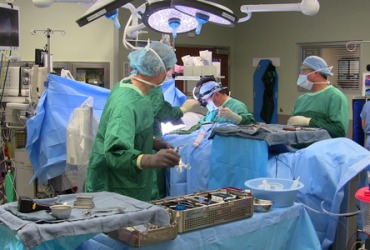
This is a retrospective review of reported outcomes of 158 patients, with a minimum of 25 years followup after microsurgical discectomy of a lumbar herniated disc. The Authors conclude that microsurgical discectomy surgery is an effective technique with high patient satisfaction. This is an important retrospective long term view on microdiscectomy, and certainly is consistent […]
9
Latest Spine News - October 26th, 2026 8:56 PM
- Is time really spine? Early versus delayed surgical decompression in traumatic spinal cord injury: a systematic review and meta-analysis
- Baseline history of primary fragility fracture is associated with medical complications and revision through 1 year in adult spinal deformity patients undergoing thoracolumbar spinal fusion
- Study of the consolidation of type B thoracolumbar fractures treated by monosegmental percutaneous osteosynthesis in patients with an ankylosed spine
- Adult attention-deficit hyperactivity disorder symptoms are associated with chronic low back pain: a nationwide cross-sectional study of 2113 individuals
- The Gut-Spine Axis in Lumbar Intervertebral Disc Degeneration: Microbial and Inflammatory Signatures
- Outcomes Analysis of Low Back Pain Patients Managed Through a Spine Center Clinical Care Redesign Pathway: An Initial Retrospective Cohort Study
- The impact on scoliosis development and the need for bracing after posterior fossa decompression for Chiari Malformation type I and de-tethering for tethered cord syndrome: a retrospective study of 171 patients
- Impact of scoliosis screening on surgical threshold attainment: a 30-year population-based longitudinal cohort study
- Accuracy of general-purpose large language models (LLMS) in interpreting adolescent idiopathic scoliosis radiographs: a comparative study with experienced spine surgeons
- Association of Spinal Epidural Lipomatosis With Systemic Lipid Metabolism in Patients With Lumbar Spinal Stenosis: A Propensity Score-Matched Study
- Longitudinal trajectories and determinants of urinary outcomes after spinal ependymoma surgery
- Clinical outcomes of the LORDS strategy for thoracolumbar spinal metastases: a retrospective cohort study
- The impact on scoliosis development and the need for bracing after posterior fossa decompression for Chiari Malformation type I and de-tethering for tethered cord syndrome: a retrospective study of 171 patients
- Mixed Reality–Assisted Surgical Planning and Patient Education in a Complex Craniovertebral Junction Anomaly: A Case Report
- Physiotherapy process with the addition of modern technologies after cervical spinal cord arteriovenous malformation (AVM) rupture: a case study
- A global sagittal deviation index (GSDI-5) incorporating upper cervical alignment: initial construct validation in forward head posture
- Adherence to home-based exercise therapy in adults with non-specific chronic low back pain: a cross-sectional study of 491 participants of the ComPaRE cLBP e-cohort (ADHERE II)
- Is therapeutic exercise as a standalone intervention effective in reducing kinesiophobia in adults with nonspecific chronic low back pain? A systematic review and meta-analysis with meta-regression
- Feasibility of Intraoperative Anterior Reduction for the Treatment of Grade II Spondylolisthesis: A Biomechanical Investigation
- The destabilizing effect of cervical foraminotomy – an ex vivo biomechanical study
- Symptom relief does not fully reflect functional adaptation after lumbar decompression: longitudinal changes in lifting biomechanics following surgery for degenerative lumbar stenosis
